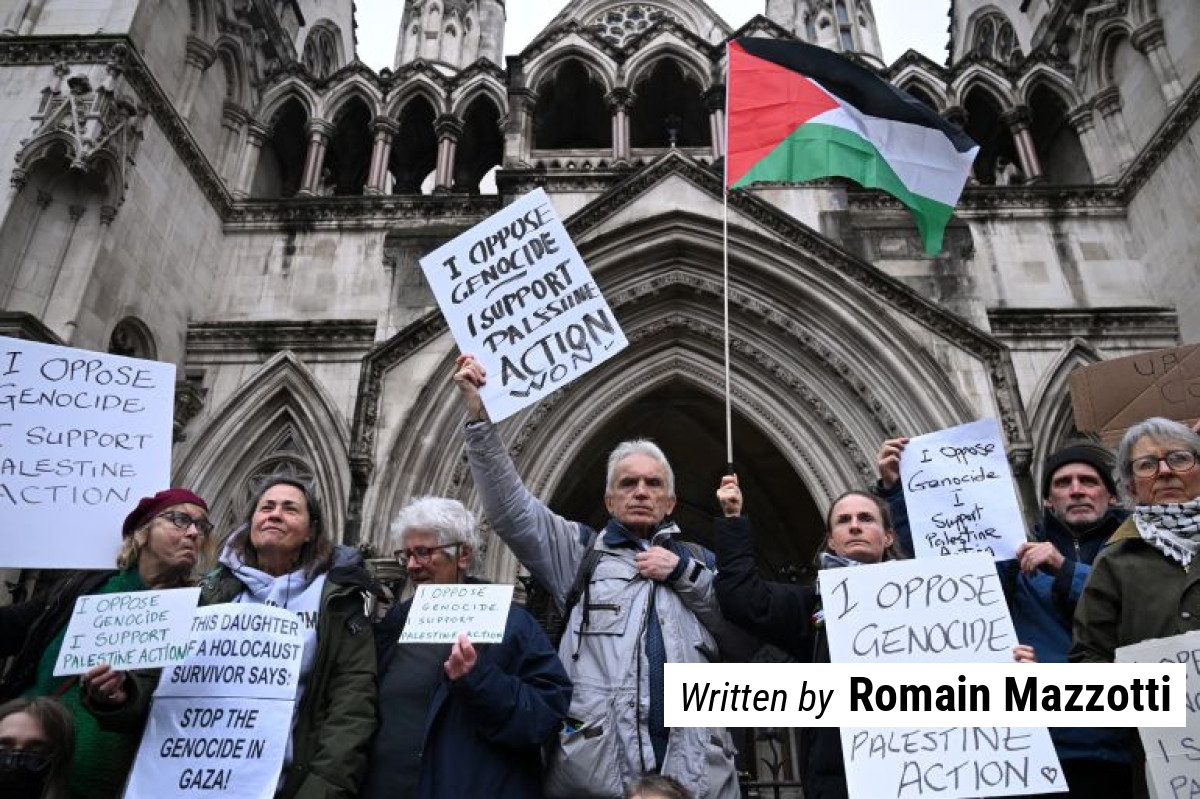
A co-founder of Palestine Action has successfully challenged the government’s decision to ban the organization under anti-terrorism legislation. The high court ruling marks the first time a proscribed organization has won such a legal challenge. Three judges, led by Dame Victoria Sharp, president of the king’s bench division, determined that the ban was unlawful, though they allowed it to remain temporarily pending government appeal.
The group was proscribed in July, making membership or support punishable by up to 14 years imprisonment. This represented the first direct action protest group banned under anti-terrorism laws. The designation sparked widespread criticism and civil disobedience campaigns. According to activist organizations, more than 2,700 people have been arrested since the ban took effect, with over 500 charged under terrorism legislation.
Huda Ammori, the co-founder who mounted the legal challenge, argued the proscription violated fundamental freedoms. The court upheld her challenge on two grounds: the ban represented a significant interference with freedom of speech and assembly, and the decision was inconsistent with the former home secretary’s stated policy. Dame Victoria Sharp acknowledged that Palestine Action’s activities, while involving criminality, did not reach the scale warranting proscription under anti-terrorism law.
Ammori characterized the ruling as transformative, stating the ban targeted the group for disrupting weapons manufacturer Elbit Systems rather than for terrorism. She emphasized that Palestine Action employed tactics historically used by anti-war groups and that the government had acknowledged the proscription centered on property damage rather than violence against people. She called for the government to accept the court’s decision and end what she described as an injustice.
Home Secretary Shabana Mahmood announced her intention to appeal the judgment. She maintained that the proscription followed rigorous evidence-based decision-making endorsed by parliament. Mahmood argued the ban does not prevent peaceful protest supporting Palestinian causes and emphasized the government’s responsibility to protect national security. The ruling leaves hundreds of charged individuals in legal limbo, as dismissal of charges would follow if the proscription order is ultimately quashed.