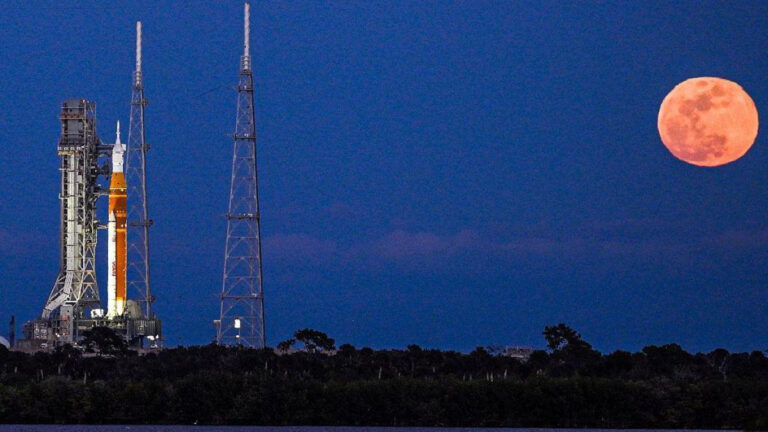
NASA plans to launch its first crewed Moon mission in over 50 years, potentially beginning in early February. The space agency will roll out its massive Space Launch System rocket and Orion capsule from the assembly building to the launch pad on Saturday. This ten-day Artemis II mission will carry astronauts farther into space than anyone has traveled before, paving the way for eventual lunar surface landings reminiscent of the Apollo era.
The crawler-transporter will move the rocket and capsule four miles to the launch pad, a journey expected to take up to twelve hours. Engineers will then connect ground support equipment including electrical systems, fuel lines, and cryogenic propellant feeds. NASA will conduct a wet dress rehearsal in late January to test fueling procedures, with possible delays if complications arise.
Launch windows depend on both rocket readiness and Moon positioning. The earliest launch date is February 6, followed by successive opportunities in early March and April. Favorable launch windows occur only one week per month, with three weeks of no opportunities following each window. Potential dates span from February through April across these three months.
The four-person crew includes NASA commander Reid Wiseman, pilot Victor Glover, mission specialist Christina Koch, and Canadian Space Agency specialist Jeremy Hansen. During the mission, astronauts will manually pilot the Orion capsule in Earth orbit, practicing steering and alignment procedures. They will travel thousands of kilometers beyond the Moon to test life-support, propulsion, power, and navigation systems while serving as medical test subjects for deep-space research.
Read also: Football : Hull could face a points deduction while competing in the Premier LeagueArtemis II will not land on the Moon. It serves as preparation for Artemis III, scheduled no earlier than 2027, though experts believe 2028 is more realistic. The landing spacecraft choice remains undecided between SpaceX’s Starship and Blue Origin’s vehicle. New spacesuits from Axiom remain incomplete. Artemis III will target the Moon’s south pole, establishing humanity’s sustained presence there through subsequent missions building the Gateway space station and deploying robotic rovers.
The last crewed Moon mission occurred in December 1972 with Apollo 17. Across all Apollo missions, twenty-four astronauts journeyed to the Moon, with twelve walking on its surface. Cold War competition initially drove American lunar exploration, but declining political interest and funding ended the program. The modern Artemis initiative seeks sustained human presence through advanced technology and commercial partnerships.
Multiple nations pursue Moon exploration ambitions for the 2030s. European astronauts and Japanese space travelers will join future Artemis missions. China targets its first crewed landing near the south pole by 2030. Russia discusses cosmonaut missions between 2030 and 2035, though sanctions and technical challenges complicate this timeline. India aims for crewed lunar missions around 2040, building on its successful Chandrayaan 3 landing near the south pole in August 2023.