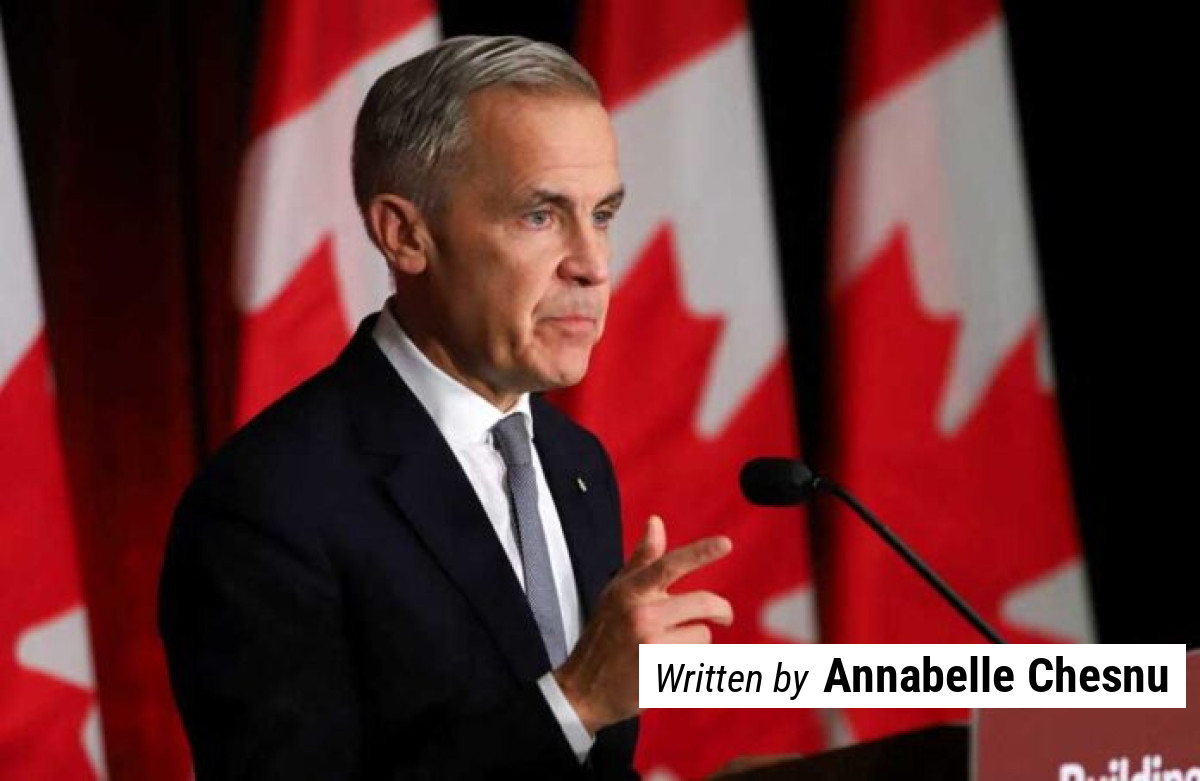
Mark Carney, Canada’s Prime Minister, is traveling to China in an effort to strengthen economic relations and reduce his nation’s dependence on the United States. The visit presents a complex diplomatic challenge of balancing trade goals with political pressures. Canada seeks to diversify its export markets while maintaining stability with Washington and upholding its commitments to national security and human rights. Amid uncertainty surrounding future trade arrangements with the US, Canada recognizes the need to repair ties with Beijing to safeguard economic stability.
Canadian officials have characterized this trip as historically significant and part of a strategy to double non-US exports. This marks the first visit by a Canadian prime minister to China since 2017. On Thursday, Carney will meet with China’s Premier Li Qiang and Zhao Leji, Chairman of the Standing Committee of the National People’s Congress. Friday’s agenda includes a one-on-one meeting with President Xi Jinping, following their previous encounter at an Asia-Pacific Economic Cooperation summit in South Korea last year. Trade, agriculture, and international security will dominate discussions.
Canada-China relations deteriorated significantly in 2018 after Huawei executive Meng Wanzhou was arrested in Vancouver under a US warrant related to Iran sanctions violations. This detention triggered Chinese retaliation, with Beijing arresting two Canadian citizens on espionage charges. All three individuals were eventually released in 2021 following Meng’s plea deal with US prosecutors. More recently, China has faced accusations of interfering in Canadian politics, though an inquiry found minimal impact on recent federal elections. Beijing has consistently denied these allegations.
Canada views China as an increasingly disruptive global power disregarding international norms. Ottawa recognizes China’s size and influence necessitate certain cooperation despite these concerns. The Canadian government asserts that this visit does not represent a policy shift but acknowledges that reducing economic reliance on the US requires increased trade with China. Carney aims to expand collaboration in shared interests such as energy and climate change while establishing clear boundaries in areas of disagreement, including defense and critical minerals.
A significant objective involves reducing Chinese tariffs on Canadian canola that have damaged prairie farmers. China imposed these agricultural tariffs last year in apparent retaliation for Canadian levies on Chinese electric vehicles announced in 2024. Chinese state media has suggested Canada paid a price for following US policies. Beijing has explicitly requested removal of EV tariffs. Trade between the nations reached approximately $118 billion in 2024, making Canada an important economic partner for China.
A major uncertainty concerns how the United States will respond to any agreements reached during this visit. The US has already imposed tariffs affecting Canadian steel, aluminium, and automotive sectors. Canada faces upcoming negotiations to renew its North American free trade agreement with the US and Mexico, scheduled for completion later this year. This agreement has shielded Canada from most of Trump’s sweeping tariffs. Former Canadian diplomat Colin Robertson noted that Americans are likely monitoring Canada-China relations very closely, while Canada maintains communication with Washington regarding its intentions.