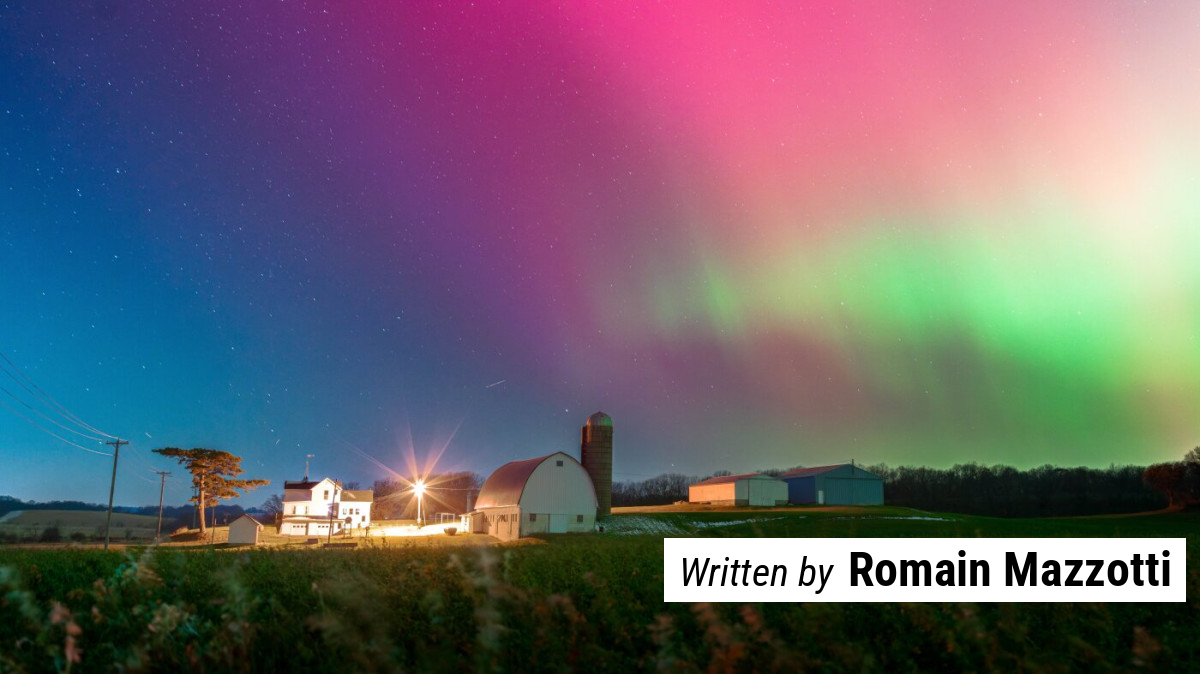
- The Northern Lights recently appeared across the United Kingdom following a period of intense solar activity.
- Different atmospheric gases and specific altitudes determine the various colors observed during an aurora display.
- There remains a small possibility for further sightings in northern Scotland on Tuesday night.
Following a recent surge in solar activity, the aurora borealis graced the United Kingdom’s night sky again this past Monday. These stunning atmospheric displays have been visible as far south as southern England since Friday. Observation opportunities reached their peak over the weekend as energy from the Sun interacted with the Earth’s atmosphere.
The scientific process begins when charged solar particles are pulled toward the poles by the magnetic field of our planet. As these particles travel, they collide with various atmospheric gases, resulting in a release of vibrant light energy. The specific type of gas involved and the altitude of the collision determine the final colors seen by observers.
Green serves as the most frequent color seen during these events, typically appearing between 100 and 190 kilometers above the ground. This familiar glow is caused by oxygen collisions in the lower thermosphere. It remains the iconic shade that most people associate with these natural light shows when viewing the horizon on clear nights.
Higher altitudes produce more distinct tones, such as red, which is a hallmark of strong geomagnetic storms. Red lights emerge above 240 kilometers when solar energy meets oxygen in thinner parts of the atmosphere. While these crimson hues are far less common than green, they provide a truly spectacular sight for lucky spectators.
Read also: Football : Hull could face a points deduction while competing in the Premier LeagueNitrogen collisions create faster, more active displays in shades of purple and blue. Purple light usually manifests between 100 and 160 kilometers up. Conversely, blue is the rarest color of all, occurring at the lowest levels below 100 kilometers. Witnessing blue in the sky signifies an exceptional celestial event has taken place.
Although the eruptions from the Sun are currently losing intensity, the celestial show may not be entirely over yet. The Met Office Space Weather Prediction Centre notes a low chance of a glancing energy blow on Tuesday night. This could lead to a brief reappearance of the lights, primarily limited to northern Scotland locations.