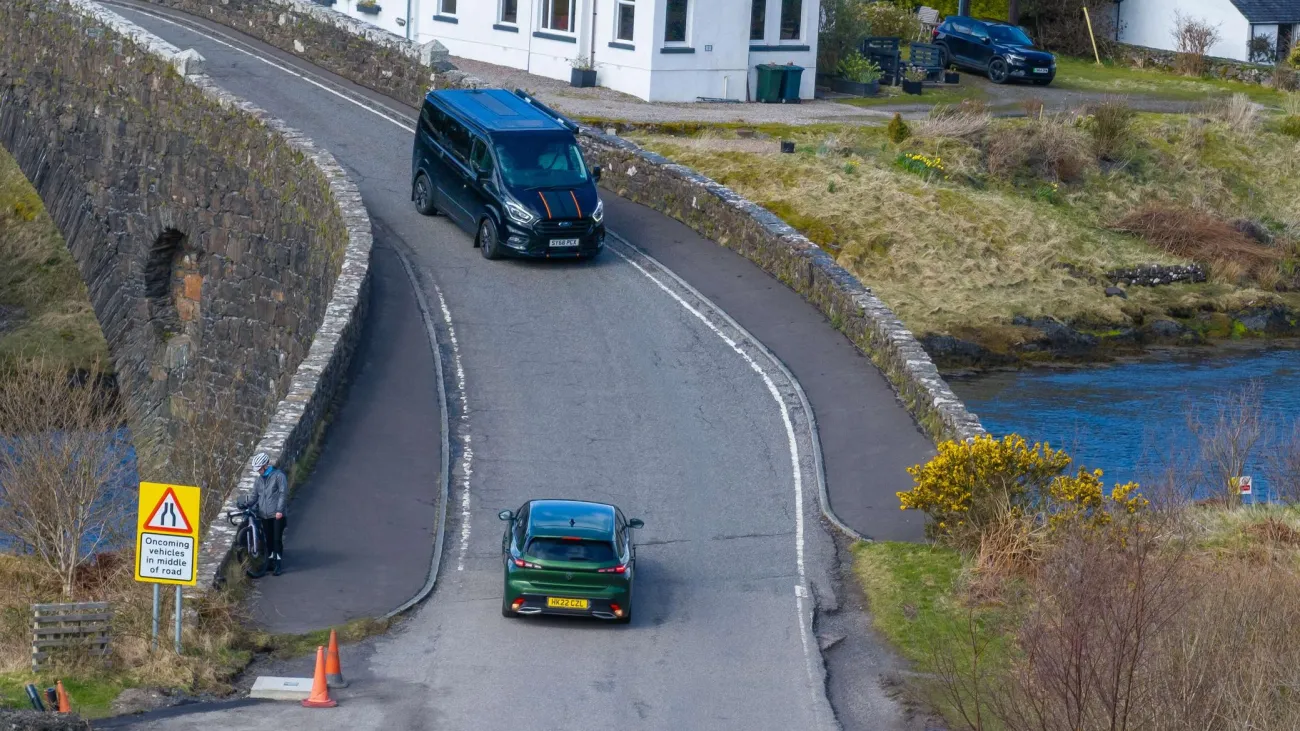
- Argyll and Bute council is installing traffic lights at the historic Clachan Bridge site.
- Local residents and officials claim the move lacks consultation and damages heritage views.
- Critics argue that the road safety justification is weak given the bridge’s low accident rate.
The installation of traffic lights at Clachan Bridge, famously known as the Bridge over the Atlantic, has sparked significant local outrage. The project involves a spend of at least 35,000 pounds by the council to manage the crossing between the mainland and the Isle of Seil. This 233-year-old structure remains a major draw for tourists.
Opponents of the scheme argue that the intervention is a desecration of a site built in 1792. The move has been criticised for lacking consultation with heritage bodies and the local community. Residents claim they only became aware of the plans when workers began excavating the road surface.
Julie McKenzie, a local councillor and seventh-generation islander, has spearheaded a petition against the work. The petition has gathered 1,500 signatures, which is three times the local population, highlighting the depth of community opposition to the modern signals in this bucolic setting.
Safety concerns and heritage disputes
The council maintains that the signals are essential for road safety, citing the narrow width of the bridge. However, records show only three slight collisions occurred between 1999 and 2024, casting doubt on the necessity of such a costly and intrusive traffic management system.
Sarah Nicholson, a fourth-generation islander, fears that the lights will actually increase danger for pedestrians. Motorists may feel they have signal-sanctioned priority, leading to aggressive driving towards those walking across the narrow tidal channel, where the footway has almost completely disappeared.
Grant Baxter, a chartered planner, described the approach as a 1980s-style intervention that ignores modern priorities. He asserts that pedestrians should be at the top of the road hierarchy, whereas this specific project appears to prioritise the movement of cars and lorries over people.
Institutional responses and alternatives
Police Scotland has expressed support for the initiative to reduce collision risks, yet they admit a significant gap in their planning. The police have not provided any specific advice regarding horses, cyclists, or pedestrians who frequently use the bridge as a scenic landmark.
Historic Environment Scotland stated it is the planning authority’s responsibility to decide on necessary consents. Nevertheless, their general guidance emphasizes that key views of historic assets should be preserved, a point raised by critics who feel the bridge’s character is being eroded.
Alternative solutions have been proposed by locals to avoid the 35,000 pound expense. They suggest that simple foliage trimming would improve sight lines at a fraction of the cost, ensuring safety without destroying the aesthetic value of the historic Atlantic crossing.