- Military strikes triggered widespread airspace closures affecting hundreds of thousands of travelers across the Middle East.
- Over 76,000 British citizens registered in affected regions with evacuation plans being developed by UK government.
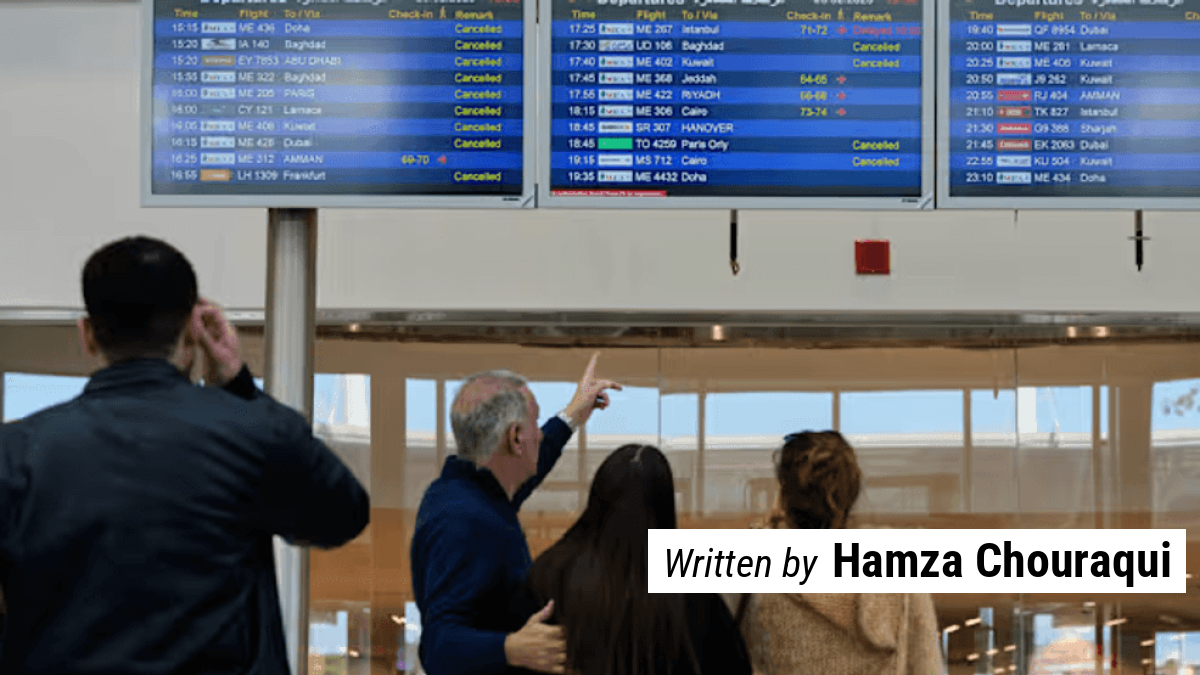
- Major airlines suspended flights with more than 3,400 cancellations across seven Middle Eastern airports on Sunday.
A military operation involving the US and Israel created severe disruption to Middle East aviation, stranding and diverting hundreds of thousands of passengers throughout the region. Multiple nations closed their airspace in response, while three critical aviation hubs connecting Europe, Africa and the West to Asia ceased operations entirely. The cascading effect has left travellers uncertain about their journeys, with passenger flow severely restricted across interconnected flight networks.
The closure of airspace in Israel, Qatar, Syria, Iran, Iraq, Kuwait and Bahrain meant passengers faced either extended delays or complete route diversions. The United Arab Emirates announced partial and temporary airspace restrictions, which FlightRadar24 confirmed prevented all flights over its territory. This decision alone shuttered airports in Dubai and Abu Dhabi, forcing major carriers including British Airways and Virgin Atlantic to cancel thousands of flights. Dubai’s status as the world’s busiest international airport magnified the cascading effects across global aviation.
Physical damage compounded the operational crisis when Iran’s retaliatory strikes targeted major regional airports. Dubai’s international airport and the Burj Al Arab sustained damage with 4 people injured. Abu Dhabi’s Zayed International Airport reported one death and 7 injuries in an incident. These impacts extended beyond operational concerns to immediate safety implications for airport personnel and infrastructure. The three dominant carriers—Emirates, Qatar Airways and Etihad—typically process approximately 90,000 daily passengers through those hubs, all of whom faced suspension of services simultaneously.
The scale became quantifiable when over 3,400 flights were cancelled across seven major Middle Eastern airports on Sunday. More than 76,000 British citizens had registered their presence in affected areas, with numbers expected to increase. The UK government initiated preparations for one of its largest historical evacuations, acknowledging the logistical complexity of moving such populations. Most registered Britons were concentrated in the UAE, comprising predominantly holidaymakers and business travellers rather than permanent residents.
Industry analysts emphasized the unprecedented complexity facing airlines and passengers. Routing constraints were further tightened by conflict between Pakistan and Afghanistan, squeezing available flight corridors even narrower. Iranian airspace remained closed until at least Tuesday morning according to official notices. Passengers awaited unclear reopening timelines while airlines issued rebooking waivers eliminating additional fees. Jonathan Escott, stranded after his Emirates flight to Dubai was cancelled, expressed widespread uncertainty: uncertainty pervaded both passenger expectations and carrier knowledge about conflict resolution.
Global carriers implemented varied response strategies. Air India suspended all Middle East flights plus routes to London, New York and Paris. Turkish Airlines halted services to Lebanon, Syria, Iraq, Iran and Jordan until Monday, with additional suspensions through the week. Delta and United suspended Tel Aviv operations. KLM cancelled Dubai, Dammam and Riyadh flights through Thursday. Lufthansa suspended Tel Aviv, Beirut and Oman services, plus Dubai operations. Multiple European carriers including Air France, Transavia and Pegasus suspended specific regional routes entirely.
Additional carriers adjusted operations substantially. Virgin Atlantic avoided Iraqi airspace, affecting India, Maldives and Riyadh flights with extended durations. British Airways suspended Tel Aviv and Bahrain flights through the following week while cancelling Saturday Amman services, offering full refunds for bookings through Wednesday. Wizz Air suspended all Israeli and UAE operations until the following Sunday. LOT cancelled Dubai and Riyadh flights through Monday while suspending Tel Aviv services until mid-March. FlyDubai suspended operations until Monday afternoon, while Air Canada halted Dubai flights through Tuesday and Israeli flights through the following Sunday.
Individual nations implemented discrete airspace restrictions. Iran closed its airspace indefinitely through its Civil Aviation Organisation. Israel shut civilian airspace per transport ministry announcement. Qatar temporarily closed its skies. Iraq closed airspace entirely. Syria partially closed southern airspace bordering Israel for twelve hours. Jordan’s air force conducted defensive drills. Kuwait closed its airspace completely. Airspace closures created routing impossibilities for carriers attempting to maintain any operational capacity across the wider region.